

The U.S. economy is facing a rare phenomenon: economic growth continues, yet the labor market has weakened at the same time. This situation is largely linked to the rapid advancement of artificial intelligence, and the U.S. central bank, namely the Federal Reserve, has adopted a “wait and see” approach. However, it remains unclear whether monetary policies can save the unemployed workers, as the impact of artificial intelligence on the labor market is still not transparent to the Federal Reserve.
Author: Sajad Sheikhi
Labor Market Weakness on the Eve of Government Reopening
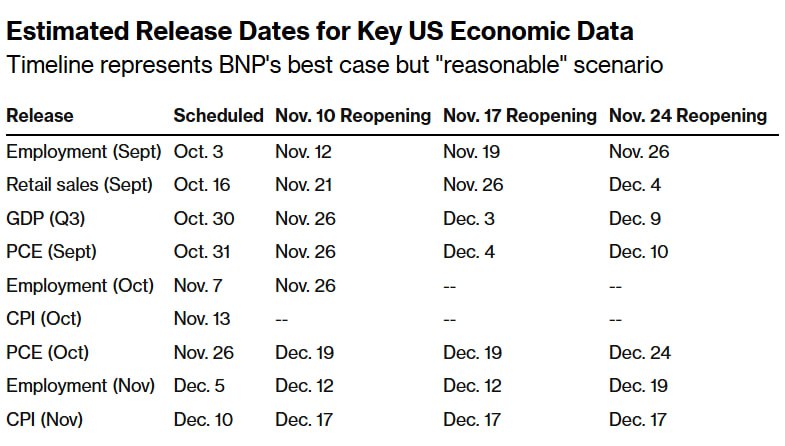
During the government shutdown, official economic data are limited, forcing the market to rely on private sector reports. These data are reliable, but they do not represent all segments of the economy. For example:
The ADP report only examines the private sector.
Private inflation indicators mainly report inflation in the goods sector.
Recently, following the Senate’s approval of the Republicans’ temporary bill, the market has become more risk tolerant with optimism about the government’s reopening. However, several important points remain:
The final vote must take place in the House of Representatives.
The temporary budget is valid only until the end of January 2026.
The proposed budget excludes Obamacare and Medicare subsidies; therefore, some Democrats may oppose it.
Weakening of the Private Sector Labor Market
According to ADP data, the labor market weakened in the second half of October: U.S. companies lost on average more than 11,000 jobs per week during the four weeks ending October 25. This figure contradicts ADP’s monthly report, which showed an addition of 42,000 jobs in October.
Wave of Layoffs and Consumer Concerns
After the post COVID period of labor hoarding, managers are now downsizing their workforce with greater ease. The advancement of automation and artificial intelligence also plays a major role in this trend.
The Challenger, Gray & Christmas Institute has reported that by the end of December, 950,000 job cuts had been announced, the highest figure since 2020.
Major companies such as Amazon, Starbucks, Paramount, and Molson Coors have carried out large scale layoffs.
This shift has turned the labor market from a “low layoff low hiring” situation into a new balance, with the scale tipping more heavily toward layoffs, thereby pushing the unemployment rate higher.
The Role of Artificial Intelligence in Economic Growth and the Labor Market
Recently, we have witnessed an unusual divergence between economic growth and the labor market: economic growth continues, but the labor market remains weak.
Financial conditions have been eased by the rise in the stock market, the depreciation of the dollar, and tax reductions.
Interest rates have also experienced consecutive cuts and are no longer restrictive.
Therefore, much of the weakness in the labor market can be attributed to automation and artificial intelligence, which boost productivity without the need for human labor. This means:
Artificial intelligence accelerates economic growth.
Even if interest rates decline, an improvement in the labor market is not guaranteed.
The equilibrium level of unemployment may remain elevated, while economic growth continues.
This situation will persist until workers adapt themselves through new skills or collaboration with artificial intelligence.
Conclusion
The U.S. labor market is weakening at an accelerating pace, partly due to the replacement of human workers with artificial intelligence.
The Federal Reserve, through its limited monetary policy tools, is unable to control this trend, although interest rate cuts may create short term relief.
The future of the economy may feature continued economic growth without a significant improvement in the labor market, until the workforce adapts to the new conditions.
Result: For now, the Federal Reserve has no choice but to closely monitor the situation, as the true impact of artificial intelligence on the economy remains unknown.