To enter the Forex market, the first step is to open an account with a reputable broker. This market is one of the largest and most liquid financial markets in the world, where traders take advantage of price fluctuations to create profit opportunities. In this article, we will explore the registration process and key considerations for opening a Forex account.
Choosing the Right Broker to Open a Forex Trading Account
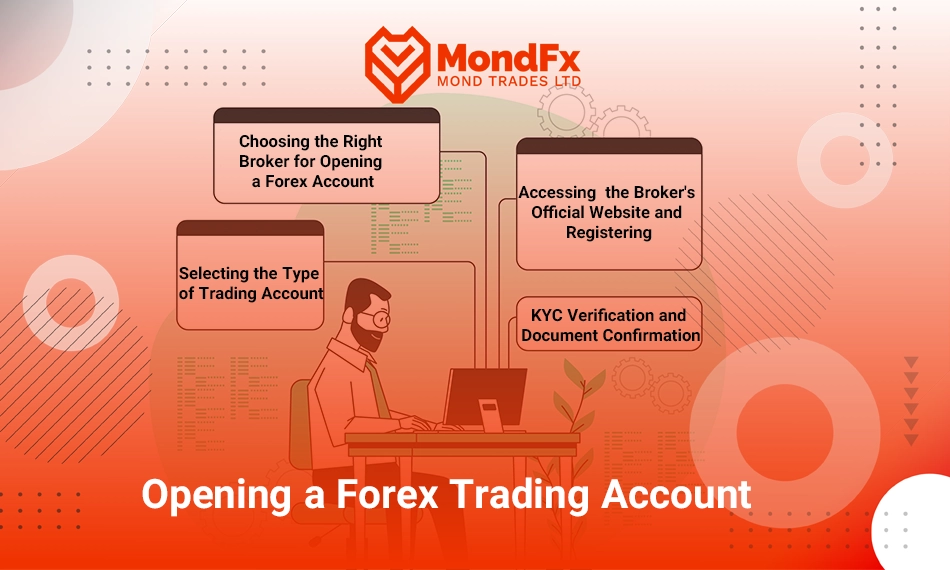
Choosing a reliable broker is the first step to entering the Forex market professionally. The ideal broker should offer acceptable levels of security, low fees, fast order execution, and quality customer support. A careful review and comparison among brokers will help you select the best option based on your specific needs.
Accessing the Broker's Official Website and Registering
To start trading in Forex, you must first visit the official website of your chosen broker. Most brokers have a section titled "Open Account" or "Register" that, when clicked, displays the registration form. In this form, you are required to enter your basic information such as your first and last name, email address, contact number, and country of residence. After completing the form, some brokers may also ask you to select the type of trading account you wish to open, typically determined by your trading experience and initial capital.
Selecting the Type of Trading Account
At this stage, based on your personal conditions, you determine which type of account best suits your trading needs. The available account types may include standard, ECN, micro, or Islamic accounts. A proper choice in account type can have a significant impact on your capital management and trading strategy.
KYC (Know Your Customer) Verification and Document Confirmation
In compliance with global anti-money laundering regulations and to enhance security, reputable brokers require a KYC process. During this stage, you will be asked to provide identification documents as well as proof of residence.
For identification purposes, a valid document such as a national ID, passport, or driver’s license is usually requested. To verify your residence, you must provide proof of address such as a utility bill (water, electricity, gas, or telephone) or a bank statement that clearly shows your address.
These documents should be clear, legible, and up to date. Their approval may take anywhere from a few hours to several business days. In some cases, brokers may request additional documents to complete the process.
Types of Forex Trading Accounts and Their Features
Forex brokers offer different types of trading accounts to meet the needs of both beginner and professional traders. Choosing the right account depends on factors such as trading experience, initial capital, trading strategy, and risk tolerance.
Standard Account
This is one of the most common and widely used account types in Forex, suitable for most traders. Standard accounts usually offer moderate spreads with no commission, although spreads may be higher in some brokers compared to ECN accounts.
Minimum deposit: Usually between $100 and $500, depending on the broker
Spread: Variable, generally higher than ECN accounts
Commission: None (some brokers may charge a small fee)
Order execution type: Market execution or instant execution
Suitable for: Beginner and intermediate traders looking for balanced trading conditions with moderate spreads and no commission
ECN Account (Electronic Communication Network)
ECN accounts are designed for professional traders and scalpers who require high-speed execution and ultra low spreads. With this type of account, traders are directly connected to liquidity providers (banks, financial institutions, and large traders), ensuring transparent pricing.
Minimum deposit: Usually $500 to $1,000 or more, depending on the broker
Spread: Very low (sometimes close to zero)
Commission: Charged per trade (typically between $3 to $10 per lot)
Order execution type: Market execution with no requotes
Suitable for: Professional traders, scalpers, and those who engage in short-term, high-frequency trading
Micro Account (Cent Account)
This type of account is ideal for beginner traders and those entering the market with a small investment. Micro accounts require a very low initial deposit and allow trading in cent-sized contracts or smaller fractions of a standard lot.
Minimum deposit: From $1 to $50, depending on the broker
Spread: Relatively higher than standard accounts
Commission: Usually none
Order execution type: Instant or market execution
Suitable for: Beginner traders and those who want to test their trading strategies with minimal financial risk
Islamic Account (Swap-Free Account)
Islamic accounts are designed for traders who, in compliance with Sharia law, wish to avoid paying or receiving overnight interest (swap fees). In this type of account, the broker removes interest charges, but may apply an alternative fee for overnight positions.
Minimum deposit: Similar to Standard or ECN accounts
Spread: May be higher than regular accounts
Commission: Some brokers may charge additional fees
Order execution type: Usually market execution
Suitable for: Traders who prefer swap-free accounts for religious reasons or long-term trading strategies
Depositing Funds into a Forex Trading Account
After verifying documents and activating your trading account, the next step is depositing funds to start trading. The deposit process varies depending on the broker and your country of residence. Some brokers offer fast and fee-free deposit methods, while others may impose certain restrictions.
Payment methods include bank transfers, credit/debit cards (Visa, MasterCard), e-wallets such as WebMoney, Perfect Money, and Skrill, as well as cryptocurrencies like Bitcoin and Tether. Depending on the broker, some of these options may not be available for Iranian users, so it is advisable to review the available deposit and withdrawal methods before selecting a broker.
The minimum deposit requirement also varies based on the type of account and broker. Many brokers require a minimum deposit of $100 for standard accounts and at least $500 or more for ECN accounts. Some brokers allow account opening with a smaller deposit, but accounts with higher initial deposits usually offer lower spreads and more benefits.
In addition to the deposit amount, you should also consider the withdrawal conditions, possible fees, and transaction processing times. Some brokers do not charge any fees for deposits, but withdrawal transactions may incur charges. The processing time also depends on the payment method; for instance, deposits via credit cards and e-wallets are usually instant, whereas bank transfers may take several business days.
If you are trading from Iran, you may face restrictions on using international credit cards. In such cases, you can use local deposit options through broker representatives, WebMoney, Perfect Money, or cryptocurrencies. Some brokers also support local payment gateways for Iranian users, enhancing the speed and security of fund transfers.
Before making a deposit, it is recommended to contact broker support to verify payment methods, processing times, and any potential fees. Additionally, it is advisable to start with a smaller deposit to test the broker’s services, and once you are confident in its reliability, you can deposit larger amounts.
Downloading and Installing the Trading Platform
Once your account is funded, the next step is to install your preferred trading platform. Most brokers support MetaTrader 4 (MT4) and MetaTrader 5 (MT5), which are among the most popular trading platforms worldwide. Some brokers also offer proprietary platforms with unique features.
To log into your trading account, enter the username and password provided by your broker. Upon logging in, you will have access to price charts, analytical tools, trade history, and risk management features, allowing you to start executing trades.
Important Considerations When Opening a Forex Account
To enhance account security and optimize trading performance, following a few key guidelines is essential. Before depositing funds, start with a demo account to familiarize yourself with the broker’s trading environment and test order execution. This allows you to gain experience without risking real capital.
Thoroughly reviewing the broker’s trading conditions is crucial. Examine factors such as spread, commission, minimum deposit, withdrawal methods, and withdrawal policies to avoid potential issues in the future. Some brokers have hidden fees that may impact your trading performance.
Prioritizing account security is a must. Use strong passwords that include a combination of letters, numbers, and special characters when logging into your account. Additionally, enabling two-factor authentication (2FA) significantly improves security and prevents unauthorized access.
Risk management and capital control are fundamental to success in Forex trading. Only invest money you can afford to lose and avoid emotional trading. Setting a Stop Loss (SL) and using a reasonable risk-to-reward ratio are among the most effective ways to minimize trading risks.
Staying updated on market news and economic developments is highly important. High volatility can directly impact trading positions. Monitoring economic events, central bank policies, and geopolitical news helps in identifying optimal entry and exit points while protecting against unexpected losses.
How to Register for Forex from Iran
Registering for Forex from Iran is slightly different from other countries due to international restrictions and financial sanctions. However, many reputable brokers still provide services to Iranian users. To open an account from Iran, you must follow specific steps to ensure a smooth entry into the Forex market.
Choosing the Right Broker for Iranian Traders
Selecting a reliable and trustworthy broker is one of the most crucial steps for entering the Forex market. Due to banking restrictions and financial sanctions, some brokers do not offer services to Iranian users. Therefore, it is essential to choose a broker that supports Iranian clients and provides suitable deposit and withdrawal options.
Checking the regulation and licenses of the broker is particularly important, as a legally supervised broker ensures the security of your capital. Additionally, the selected broker should offer strong Persian-language support, local deposit and withdrawal options, and support for e-wallets such as WebMoney and Perfect Money.
One of the best brokers for Iranian traders is MondFx. This broker provides full support for Iranian clients and offers deposit and withdrawal methods via local bank transfers, WebMoney, Perfect Money, and cryptocurrencies. Additionally, MondFx is a suitable choice for Iranian traders due to its competitive spreads, fast execution, various account types, and MetaTrader 5 platform.
Before choosing a broker, make sure to review its terms and conditions, assess its security measures, support services, and transaction processing speed to avoid potential issues.
Differences in Forex Registration Process Between Iran and Other Countries
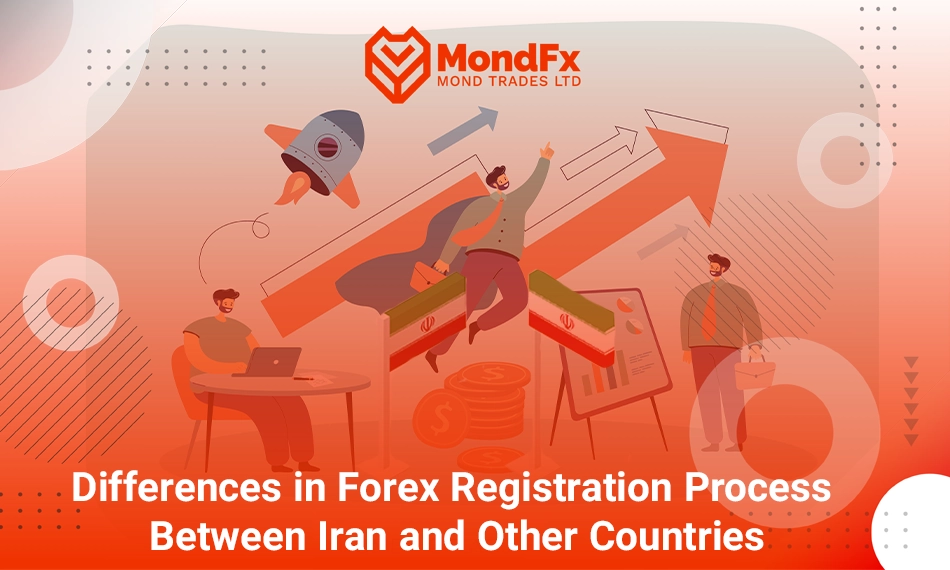
The process of registering for Forex trading, whether in Iran or other countries, includes choosing a broker, signing up, verifying identity, depositing funds, and starting trading. However, Iranian traders face challenges due to financial sanctions and banking restrictions, making the process slightly different. Below are the key differences in registration steps inside and outside Iran.
1. Choosing a Broker
Outside Iran: Traders worldwide have access to a wide range of regulated brokers overseen by FCA, ASIC, CySEC, NFA, and other financial authorities. These brokers support international credit cards, foreign bank accounts, and various payment methods.
In Iran: Many reputable global brokers do not provide services to Iranian users due to sanctions. Therefore, traders need to choose brokers that accept Iranian clients and offer suitable deposit and withdrawal methods. Some brokers have local representatives to facilitate financial transactions, while others provide options such as local bank transfers, WebMoney, Perfect Money, and cryptocurrencies.
2. Accessing the Broker’s Website
Outside Iran: Users can visit the broker’s official website directly and register without using a VPN or proxy.
In Iran: Some broker websites are blocked for Iranian users. To access them, a VPN or proxy may be required, or traders can use alternative links provided by the broker.
3. Signing Up and Completing Personal Information
Outside Iran: Users can enter their personal details without restrictions. Some brokers send a verification code via an international mobile number.
In Iran: Some brokers do not accept Iranian phone numbers for registration. In such cases, users can use virtual international numbers to receive the verification code.
4. Identity Verification and Document Submission (KYC)
Outside Iran: Brokers typically require users to submit an official identification document such as a passport, national ID card, or driver’s license. Additionally, proof of residential address, such as a utility bill or bank statement, may be required. In most countries, KYC verification is completed quickly, and users can verify their identity easily.
In Iran: Due to international sanctions, some brokers either do not accept Iranian traders or perform more thorough identity verification. If a utility bill or bank statement in the trader’s name is unavailable, some brokers accept alternative documents, such as family utility bills, rental agreements, or vehicle insurance documents.
5. Depositing Funds into a Trading Account
Outside Iran: Users can deposit funds using international credit/debit cards (Visa, MasterCard), foreign bank transfers, PayPal, Skrill, and other global payment solutions. The deposit process is usually quick and free from banking restrictions.
In Iran: Due to the lack of access to international banking systems, Iranian users cannot use credit cards or international bank accounts. Instead, they commonly use alternative methods such as WebMoney, Perfect Money, cryptocurrencies (Bitcoin, Tether), or local currency deposits via brokers’ representatives. Some brokers offer local payment gateways, making it easier for Iranian traders to deposit funds.
6. Withdrawing Funds from a Trading Account
Outside Iran: Users can withdraw their profits directly to a foreign bank account, international credit card, or e-wallets like Skrill and PayPal, which provide fast withdrawals with minimal fees.
In Iran: Due to banking restrictions, traders must use WebMoney, Perfect Money, cryptocurrencies, or local broker representatives for withdrawals. Some brokers offer direct Rial withdrawals, but users must be aware of potential withdrawal fees.
7. Access to Broker Support
Outside Iran: Brokers provide customer support via live chat, email, and international phone calls. In some countries, brokers even have physical offices where clients can receive direct assistance.
In Iran: Iranian users rely on online support and email communication. Some brokers provide Persian-language support, allowing Iranian traders to receive assistance in Farsi. Additionally, some brokers operate Telegram or WhatsApp channels for easier communication with Iranian clients.
8. Using MetaTrader and Executing Trades
Outside Iran: Traders can access MetaTrader 4, MetaTrader 5, or other broker-provided platforms without any restrictions.
In Iran: Some traders experience server blockages when logging into MetaTrader. In such cases, using a VPN or VPS (Virtual Private Server) can help bypass restrictions and ensure a stable connection.
Summary of Forex Registration Differences Between Iran and Other Countries
Broker Accessibility:
Outside Iran: Traders can choose from a wide range of regulated international brokers.
In Iran: Traders must select brokers that accept Iranian clients and offer suitable payment solutions.
Access to Broker Websites:
Outside Iran: No need for a VPN or alternative links.
In Iran: Some broker websites are blocked, requiring a VPN or proxy to access them.
Identity Verification:
Outside Iran: Providing official identification and proof of address is straightforward.
In Iran: Some brokers require additional or alternative documents for verification.
Deposit & Withdrawal Methods:
Outside Iran: Traders use bank transfers, credit/debit cards, and international e-wallets.
In Iran: Deposits and withdrawals rely on WebMoney, Perfect Money, cryptocurrencies, or broker representatives.
Customer Support:
Outside Iran: Support is available via phone, live chat, and email.
In Iran: Brokers with Persian-language support and alternative communication channels (Telegram, WhatsApp) are preferred.
Access to MetaTrader:
Outside Iran: No restrictions on accessing trading platforms.
In Iran: VPN or VPS may be required for stable access.
While Forex registration follows the same general process worldwide, Iranian traders face additional challenges due to financial sanctions and banking restrictions. Using a broker that supports Iranian clients and offers alternative deposit and withdrawal methods can help simplify the process and ensure a smoother trading experience.
How to Open a Real Account in Meta Trader 5 (MT5)
MetaTrader 5 (MT5) is one of the most popular trading platforms in Forex, stocks, and cryptocurrencies, offered by various brokers. To execute real trades on this platform, you must first open a real account with a broker and then connect it to MetaTrader 5.
Steps to Open a Real Account in MetaTrader 5
1. Choosing a Broker and Registering on Its Website
To open an account in MetaTrader 5, you first need to choose a reliable broker that supports this platform. Visit the official website of the broker and complete the registration process. During this step, you will be required to enter your full name, email address, phone number, and country of residence.
2. Identity Verification and Document Approval
After registration, you need to complete the identity verification process (KYC) to activate your real account. Brokers require identity verification documents such as a national ID card, passport, or driver’s license, along with a proof of address document (utility bill, bank statement, or official document). The verification process can take a few hours to several business days, depending on the broker.
3. Selecting an Account Type and Funding It
Once your identity is verified, you must choose your trading account type. Brokers typically offer different account types, including Standard, ECN, Micro, and Islamic accounts. Your choice should be based on your capital, trading strategy, and risk tolerance.
After selecting an account, you need to fund it. Brokers provide various deposit methods, such as bank transfers, credit cards, e-wallets (WebMoney, Perfect Money), and cryptocurrencies. The minimum deposit amount varies depending on the broker and account type.
4. Downloading and Installing MetaTrader 5
To log into your real account, you need to install the MetaTrader 5 software on your computer, smartphone, or tablet. You can download it from the official MetaTrader website or the broker's download page. Once installed, launch the platform and proceed to the login step.
5. Logging into a Real Account in MetaTrader 5
After installing and launching MetaTrader 5, follow these steps to connect to your real trading account:
Click on the File menu in the top-left corner.
Select Login to Trade Account.
Enter your Login (Username), Password, and Server name provided by your broker.
Click OK or Login to connect.
This information is usually sent to you via email after opening your trading account. If you haven’t received it, check your Spam folder or contact the broker's support team.
Once successfully logged in, you can check the server connection status at the bottom of the screen. You will also have access to price charts, trading tools, account balance, and open trade positions.
If you encounter issues such as server connection errors or invalid login credentials, ensure that you have entered the correct server name and that your internet connection is stable. If the issue persists, contact the broker’s support team for assistance.
6. Reviewing Account Settings and Placing Your First Trade
After logging into your real account, it is essential to review and adjust your trading settings in MetaTrader 5:
Adjust Leverage (if allowed by the broker).
Review Spreads and Commissions.
Set up Stop Loss (SL) and Take Profit (TP).
Check market hours and supported trading instruments.
To place your first trade, select a trading symbol, click on New Order, and configure trade volume, order type (Market or Pending), and other parameters before executing the trade.
Important Considerations Before Opening a Real Account in MetaTrader 5
Use a Demo Account First
Before opening a real account, practice using a demo account to familiarize yourself with the platform’s features, broker conditions, and order execution process. This will help you gain experience without risking real money.
Review Broker Conditions Carefully
It is essential to check broker conditions such as spread, commission, minimum deposit and withdrawal limits, and leverage levels, as they can directly impact your profitability. Some brokers have hidden fees, which can increase your trading costs if you are unaware of them.
Check Deposit and Withdrawal Methods
Ensure that your broker offers fast and low-cost payment methods, including bank transfers, e-wallets, and cryptocurrencies. Also, verify how long withdrawals take and whether the broker imposes any withdrawal restrictions.
Manage Risk and Capital Properly
Effective risk management is crucial in Forex trading. Before entering real trades, always set Stop Loss (SL) and Take Profit (TP) levels to protect your capital from unexpected losses. Additionally, adjust your trade size based on your account balance and avoid excessive use of leverage.
Customize Trading Tools for Better Performance
To improve your trading experience, you can customize charts, indicators, and analysis tools in MetaTrader 5. Setting up these tools correctly can enhance your decision-making process and help you avoid common trading mistakes.
Final Thoughts
Opening a real account in MetaTrader 5 requires registering with a broker, completing identity verification, funding your account, and logging into the MT5 platform. Once logged in, you can access advanced trading tools and start executing trades. By following security precautions, risk management strategies, and reviewing broker conditions, you can ensure a successful trading experience in Forex and other financial markets.