
In the global economy, the relationship between inflation and gold prices has always attracted investors’ attention. Historical data shows that during periods such as the 1970s, when U.S. inflation surged above 13%, gold rose from $35 to over $800 per ounce. However, this connection has not always been straightforward; for example, in the 1990s, despite average inflation of around 3%, gold fell below $300. In more recent years, during high-inflation periods such as after the 2008 financial crisis and the COVID-19 pandemic, gold again reached record highs. Overall, while gold tends to show a positive correlation with inflation in the long run, factors such as real interest rates, monetary policy, and the strength of the U.S. dollar also play a decisive role in shaping its price trends.
How Does Inflation Affect Gold Prices? A Comprehensive Review for Investors
Inflation, as one of the most important economic factors directly and indirectly affecting gold prices, can be examined from two perspectives: gold’s role as a store and protector of value amid declining purchasing power of money, and the market’s reaction to anti inflation policies such as interest rate hikes.
Gold as a Store of Value Against Inflation
Rising inflation means a reduction in the purchasing power of each banknote relative to its previous value. In other words, a banknote may show the same nominal value, but after inflation, it no longer has the same buying power as before. In such conditions, investors seek assets that resist the depreciation of paper money.
Gold, as one of the most resilient assets due to its limited supply and independence from financial and credit systems, has historically served as a safe choice against inflationary crises. Therefore, as inflation rises, the market’s inclination to buy gold increases, and this increased demand usually leads to a rise in its price.
The Challenge of Gold Against Central Banks and Interest Rates
When inflation rises, central banks respond by increasing interest rates to control it. The purpose of raising interest rates is to reduce money circulation and control demand. However, interest rates themselves have a significant impact on the gold market; as rates rise, investors tend to shift toward assets that offer periodic income or guaranteed returns, such as bonds or bank deposits. Since gold does not provide periodic yields, it may lose some of its appeal in such situations, putting downward pressure on its price.
The Effect of Inflation Before It Occurs
In financial markets, sometimes what is expected to happen is more important than the actual reality. Even if inflation has not yet risen, but signs of its increase are observed, investors move preemptively toward assets that are resistant to inflation. Gold is one of the first options in such situations. Therefore, merely the anticipation of rising inflation in the future can increase demand for gold and, consequently, drive its price up.
When Inflation Rises; Should We Buy Gold or Currency?
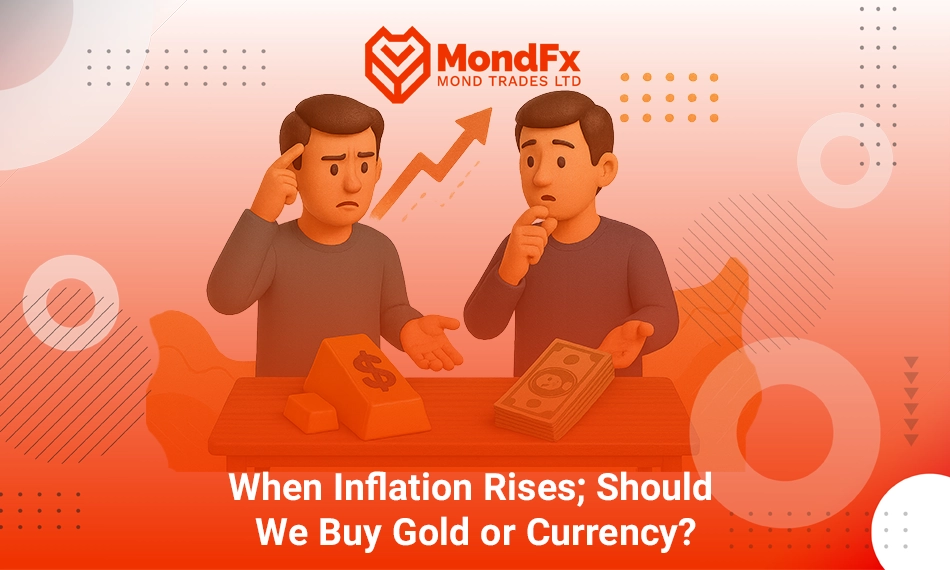
The choice between gold and currency depends on factors such as risk tolerance, investment horizon, and macroeconomic conditions. If the goal is to preserve long term asset value against inflation, gold is a less volatile and more predictable option. However, if the objective is to take advantage of short term market fluctuations, currency can be an active and profitable market.
This precious metal has managed to maintain its position over time as a safe haven for investors. Historical performance of gold shows that over long periods, This asset has not only preserved its value but, in many cases, has managed to maintain or even increase the purchasing power of assets through price appreciation.
On the other hand, the currency market is mainly known as a platform for rapid reactions to economic fluctuations and short term opportunism. In times of economic instability or national currency depreciation, many market participants prefer to move toward foreign currencies. However, the currency market carries significantly higher risks, and investing in it requires full awareness of geopolitical conditions, economic news, and precise market volatility analysis. Therefore, the choice between gold and currency should be made based on risk analysis, investment time frame, and financial strategy.
Is Gold the Best Investment Option During Inflation?
Gold is just one of the investment options during inflationary periods, and not necessarily the best for everyone. For some, real estate markets, investment funds, stocks of companies related to essential commodities, or even digital assets may provide suitable returns especially if their goal is more active and short term profit.
Therefore, if the aim is to preserve capital value in the long term and reduce risk against inflation, gold is a reliable and trustworthy option. But for those seeking capital growth, diversification, or faster returns, combining gold with other assets could be a smarter strategy.
How Does Inflation Cause Gold Prices to Rise or Fall? + Market Analysis
How does inflation cause gold prices to rise or fall? (Comprehensive Gold Market Analysis)
Inflation is one of the key factors driving gold price volatility, but its impact is not always one sided. Depending on the type of inflation, the direction of monetary policies, and market reactions, rising inflation can lead to either an increase or a decrease in gold prices. To better understand this relationship, it is essential to consider variables such as real interest rates, inflation expectations, and central bank policies.
The Impact of Inflation on Gold Price Growth
During periods when inflation rates rise and real interest rates (i.e., nominal interest rates minus inflation) turn negative, investors seek assets that can protect their capital’s value against declining purchasing power. In these conditions, gold takes on a stronger role as a safe haven investment. Conversely, if rising inflation is accompanied by a rapid and significant increase in interest rates, the gold market’s direction can change entirely.
Therefore, contractionary policies by central banks can pose a serious barrier to gold price growth during inflationary periods, even if inflation itself is rising.
Gold Market Analysis During Inflation: Opportunity or Threat?
Gold During Inflation: Opportunity or Threat for Investors? For investors, the gold market during inflationary periods is often considered an important opportunity to preserve asset value. When the purchasing power of money declines and real interest rates turn negative, gold can serve as a safe and physical asset that prevents the erosion of capital value against inflation.
Many investors, especially over the long term, view gold as an anti inflationary safe haven. While in the short term, particularly when interest rates rise rapidly, gold may not deliver the expected returns; overall, in an inflationary outlook, gold is seen as a strategic opportunity for investors seeking stability and capital protection. Gold and Central Banks: A Threat to Monetary Policy? For central banks, the gold market during inflation can be both a threat and an opportunity, depending on their position in policy making. On one hand, rising gold prices in response to monetary instability may be interpreted as a sign of declining public confidence in the national currency, potentially undermining the central bank’s credibility in controlling inflation.
This issue is especially threatening in economies with high inflation and challenges in managing inflation expectations. On the other hand, central banks with significant gold reserves benefit from the increased value of their holdings during such times, gaining greater leverage to manage liquidity and their balance sheets. Therefore, gold is a double edged sword for central banks that can be either a threat or an opportunity depending on their role in the economic system. Gold in Financial Markets: A Liquidity Barrier or a Diversification Tool? During inflationary conditions, gold plays a dual and strategic role in financial markets. On one side, increased investor demand for gold during inflation may lead to reduced liquidity in traditional markets like bonds and growth stocks. This shift in capital allocation can decrease the attractiveness of certain asset classes and even exert downward pressure on stock market indices.
On the other hand, for many portfolio managers and market participants, gold is recognized as an effective tool for diversifying investment portfolios during economic instability. In fact, including gold in a portfolio can help reduce systemic risk and balance the impact of inflationary volatility on overall portfolio returns.
As a result, gold’s role in financial markets is not seen as a direct threat but rather as a defensive and strategic complementary opportunity during inflationary periods. This combined position makes gold one of the vital instruments in risk management and capital value protection against inflation.
Why Does Gold Price Rise During Inflation? A Scientific and Practical Perspective
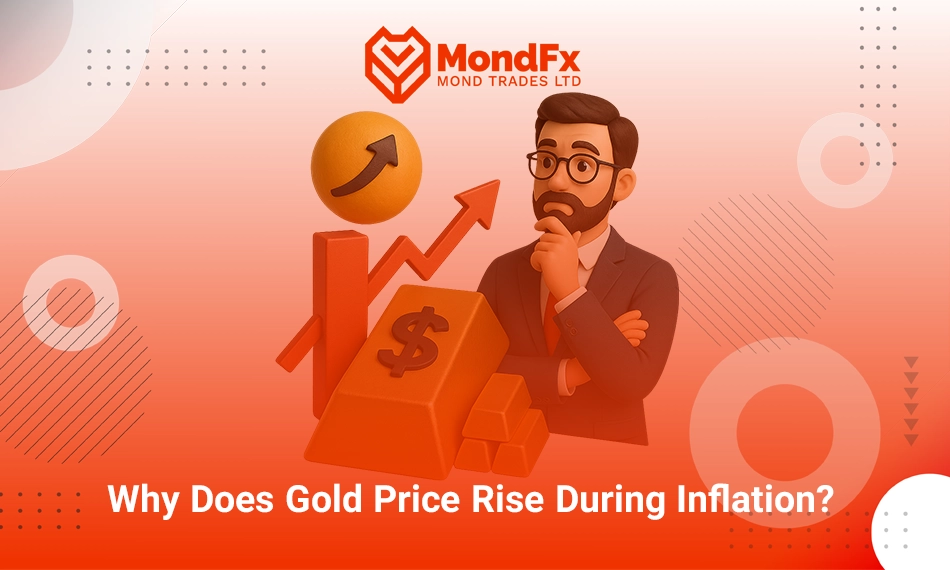
What Exactly Is Inflation and Why Does It Matter? Inflation means that the prices of goods and services increase one by one, but your purchasing power does not remain the same. Simply put, if today you could buy a basket of goods with a certain amount of money, tomorrow you would only be able to buy part of that basket with the same amount. In other words, your money, without any visible change, has become less valuable. Why Does Everyone Think of Gold During Inflationary Periods? Unlike money, gold cannot be printed. Its quantity is limited, it is not dependent on governments, and monetary policies cannot affect its intrinsic nature. These characteristics have made gold known in the minds of many investors as a safe haven asset during crises.
During times of economic instability or significant inflation, gold reasserts its position. People seek a place to preserve their assets, and gold exactly fulfills this role. The Role of Investor Psychology: Inflation Expectations One of the less visible but extremely important aspects of the gold market is inflation expectations. The market does not just react to what has happened but also reacts immediately to what is likely to happen.
If economists and investors sense that inflation is on the way, they start buying gold even before official price increases occur. This proactive demand can be a major driver of rising gold prices.