
Author: Sabah Novinfar
The Strait of Hormuz, the strategic chokepoint of the Persian Gulf, is one of the most vital routes for the transportation of oil and gas in the world. Every day, an enormous volume of oil and LNG passes through this corridor, and any disruption to it could plunge the global energy market into crisis. As the main artery for energy supply to global markets, this strait plays a highly significant role in the world economy, and any blockage of it could trigger a wave of turmoil in energy markets. In this article, the scenario of a blockage of the Strait of Hormuz, its economic consequences, and its impact on global oil and natural gas trade and related industries will be examined.
The Strait of Hormuz; The Vital Artery of Global Energy
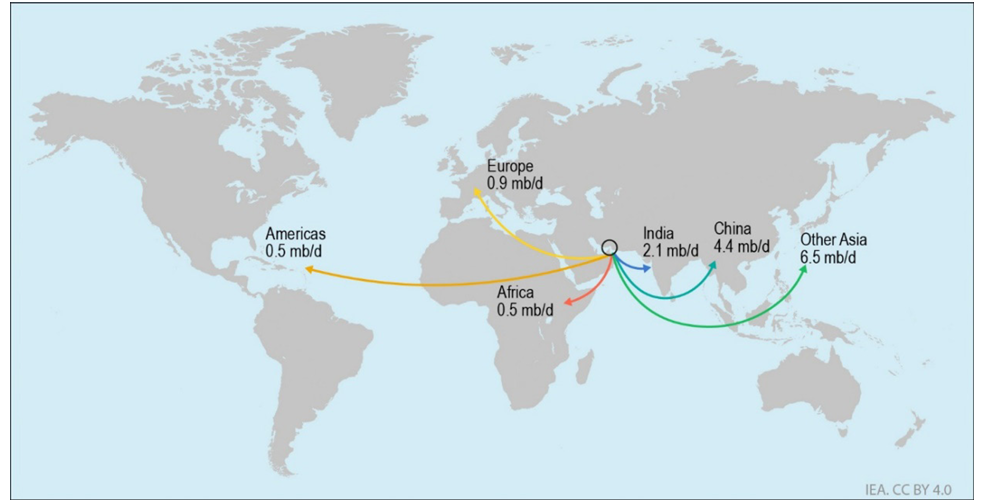
The Strait of Hormuz connects the waters of the Persian Gulf to the Gulf of Oman and the Indian Ocean and functions as a strategic passage for the transportation of oil and gas. According to international statistics, approximately 20 million barrels of oil pass through this strait daily, equivalent to 30 percent of global oil trade. A significant portion of this oil is exported to Asian countries such as China, India, and Japan.
In addition to oil, liquefied natural gas (LNG) exports from Qatar and the United Arab Emirates also transit through the Strait of Hormuz. These countries are among the world’s largest LNG exporters, and Asian and European markets are highly dependent on these supplies. Therefore, the Strait of Hormuz plays a vital role in global energy supply, and any disruption to it could have widespread effects on global markets.
Key Statistics:
Oil: 20 million barrels per day (30% of global oil trade) transit through the strait, 70% of which is exported to Asia.
Natural Gas: All LNG exports from Qatar and the United Arab Emirates pass through this route (20% of global LNG trade), and there is no alternative route capable of handling this volume.
Scenario of a Blockage of the Strait of Hormuz: A Global Energy Crisis
A blockage of the Strait of Hormuz could constitute an unprecedented global energy crisis. If Iran were to close this route, oil and gas supplies to Asian and European countries would be disrupted, and prices would rise sharply. The potential impacts of this scenario on different segments of the energy market are as follows:
1. Reduction in Global Oil Supply
Approximately 20 million barrels of oil pass through the Strait of Hormuz daily, equivalent to 20% of global oil supply. Blocking this route would lead to a severe contraction in global supply and result in oil shortages in international markets.
2. Surge in Oil and Gas Prices
One of the primary consequences of a blockage would be a sharp increase in oil and gas prices. Forecasts indicate that if the Strait of Hormuz were closed, the price of oil could exceed $120 per barrel and, under critical conditions, rise to $140 or even higher. Such price increases would not only elevate production and transportation costs but also raise energy expenses for various industries worldwide.
3. Disruption in LNG Trade
Liquefied natural gas (LNG) exports from Qatar and the United Arab Emirates, which entirely transit through the Strait of Hormuz, would be disrupted in the event of a blockage. This disruption would have serious repercussions for global LNG markets, and Asian and European countries that are highly dependent on these supplies would face shortages and an energy crisis.
Economic Consequences for Iran and the Region
A blockage of the Strait of Hormuz would not only trigger a crisis in global oil and gas markets but would also impose significant economic consequences on Iran and neighboring countries.
Iran:
Iran’s direct dependence on the Strait of Hormuz for oil exports means that closing this route would lead to a decline in oil revenues, reduced tax income, and a domestic economic crisis.
The Region:
Regional countries that rely on oil and gas exports would face declining revenues and economic crises. Countries that depend on relatively inexpensive Gulf oil would, in the event of a blockage, encounter rising costs, inflation, and energy shortages.
Iran’s Instruments for Blocking the Strait of Hormuz
Iran could employ various military and strategic instruments to block the strait:
Electronic Warfare:
Disrupting ships’ navigation systems; relatively low cost but high risk, and capable of interfering with the transit of oil and gas.
Military Attacks:
The use of drones and missiles against vessels and oil facilities, which could provoke a rapid Western response.
Naval Mining:
Effective but costly; reopening the strait after mine deployment could take weeks or even months.
Probability Analysis in the Event of a Crisis
Despite Iran’s capability to block the strait, such an action is considered a last resort. The potential consequences include severe economic and political crises in the region and an immediate response from Western countries, particularly the United States. Such conditions could lead to military confrontation and extreme volatility in global oil and gas markets.
Impact of Disruptions on the Global Market
Oil:Any disruption in the Strait of Hormuz would result in supply shortages and an increase in global oil prices. Alternative options are limited, and a severe supply shock would occur.
Natural Gas:Disruption in LNG flows would reduce global supply by 20% and place pressure on Asian and European markets.
Asian Countries:India, Bangladesh, and Pakistan would experience the greatest impact in terms of energy security and shortages affecting their industries.
Alternative Oil Export Routes
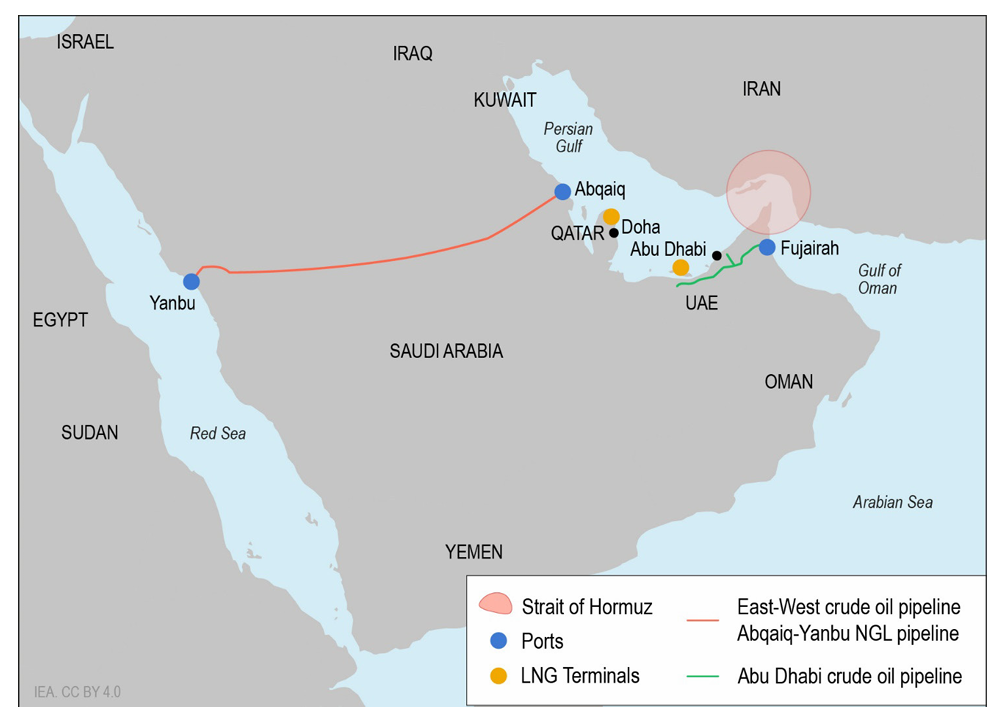
United Arab Emirates:The Abu Dhabi Crude Oil Pipeline (ADCOP), with a capacity of 1.5 million barrels per day, enables the transfer of oil to Fujairah.
Saudi Arabia:The Abqaiq–Yanbu pipeline system, with a total capacity of 5 million barrels per day, offsets a portion of the reduction in global supply.
Potential Impact on the Global Market
Oil:Any disruption in the Strait of Hormuz would lead to supply shortages and an increase in global oil prices.
Natural Gas:Disruption in LNG flows would reduce global supply by 20% and place pressure on Asian and European markets.
Vulnerable Countries:India, Bangladesh, and Pakistan would face the greatest risk in terms of energy security and industrial shortages.
Conclusion
A blockage of the Strait of Hormuz represents a catastrophic scenario for the global energy market and oil trade. Although such an action could be regarded as a political pressure instrument for Iran, its economic and security consequences for Iran, regional countries, and the global market would be extremely severe. For investors and traders in oil and gas markets, preparedness for sharp price volatility and effective risk management in the face of such a potential crisis is essential.