

The gold market has always been a place where investors rush to seek refuge in moments of crisis, yet few clearly explain why even the slightest change in interest rates can propel the price of this gleaming metal from the ground to the sky or, conversely, send it into a sudden decline.
Behind this intense relationship lies a hidden battle between the power of money and the appeal of safe haven assets a battle whose outcome can shape individuals’ wealth, governments’ policies, and even the direction of the global economy. In a world where central banks shock the markets with every decision they make, understanding why a simple figure called the interest rate can rewrite the fate of the gold market is not merely an economic curiosity, but a vital necessity for every investor. In this article from MondFx , we will examine the relationship between interest rates and gold. Stay with us.
Why Do Changes in Interest Rates Affect the Price of Gold?
Unlike many financial assets such as bonds or bank deposit accounts, gold generates no interest or cash return. This characteristic makes the value of holding gold more dependent on investors’ expectations of economic conditions than on direct cash flows.
The Impact of High Interest Rates on the Attractiveness of Investing in Gold
When interest rates in financial markets rise, assets that offer clear and guaranteed returns become more attractive. This situation reduces gold’s appeal, since holding it carries a higher opportunity cost compared to yield bearing assets, prompting investors to shift their capital toward return generating options.
The Impact of Lower Interest Rates on Rising Demand for Gold
Conversely, when interest rates decline or market outlooks point to sustained low rates, the profitability of other assets decreases, and investors seek assets that can preserve the value of their capital. As a reliable store of value in such periods, gold faces increased demand, leading its price to rise.
The Role of the Dollar’s Value in the Influence of Interest Rates on Gold
Changes in interest rates also have an indirect impact on the value of the US dollar. An increase in interest rates typically strengthens the dollar, which can exert additional downward pressure on gold prices. Conversely, a decrease in interest rates may weaken the dollar, thereby supporting the rise in gold prices.
Conclusion on the Relationship Between Interest Rates and Gold Prices
Changes in interest rates, through altering the opportunity cost of investing and shifting the relative value of the US dollar, play a direct role in determining the level of demand and consequently the price of gold. Investors seeking better management of their assets in changing economic conditions must carefully consider this sensitive and crucial relationship.
Real Interest Rates and Gold
In more advanced financial market analyses, investors focus not only on nominal interest rates but also on real interest rates. Real interest rates are equal to nominal interest rates minus inflation. This indicator shows the true return on investment after accounting for the effects of inflation and is considered a more reliable metric for investment decision making.
The Impact of Negative Real Interest Rates on Gold Prices
When real interest rates are negative, it means that inflation has surpassed the nominal interest rate. In such conditions, holding cash assets or bank deposits becomes loss making in terms of real value. This situation drives investors to seek assets capable of preserving value against the decline in purchasing power. Gold, as a physical asset and a traditional store of value, becomes highly attractive under these circumstances.
Statistical Data on the Relationship Between Real Interest Rates and Gold
According to data published by the Bank for International Settlements (BIS) in 2023, there is a significant correlation between negative real interest rates and rising gold prices. During periods when real interest rates have fallen below zero, gold prices have generally trended upward and demand has increased. This correlation has become particularly pronounced in recent years as inflationary fluctuations have intensified in major global economies.
Conclusion on the Role of Real Interest Rates
A proper understanding of real interest rates is critically important for gold investors. A careful examination of real interest rates can serve as a leading indicator for forecasting gold price trends, especially in conditions where inflation expectations are high and expansionary monetary policies are being pursued.
Gold During Periods of Inflation and Economic Recession
One of the most important reasons investors turn to gold is its role as a protective shield against inflation and economic recession. Gold has traditionally gained a prominent position in times when the value of national currencies comes under pressure or when economic growth declines. As a physical asset with limited supply, gold has the ability to preserve purchasing power during periods of economic instability.

The Impact of Low Interest Rates on Gold Prices
During periods when central banks such as the Federal Reserve reduce interest rates to stimulate economic growth, investors typically expect inflation to rise. In such circumstances, cash and fixed income assets lose their appeal, and gold due to its store of value characteristics attracts increased demand. This rise in demand directly leads to higher gold prices.
Historical Examples of Gold’s Performance During Crises
The 2008 Global Financial Crisis: Following the major central banks’ sharp reductions in interest rates, gold prices began an upward trend and continued to rise in the subsequent years.
The Post COVID 19 Pandemic Period: In response to extremely expansionary monetary policies and near zero interest rates, gold prices reached their historical peak of around $2,070 per ounce in 2020. According to data published by the World Gold Council, this price increase was among the fastest growth periods in recent decades.
Summary of Gold’s Role in Economic Crises
Gold has consistently managed to maintain its position as a safe haven asset during periods of inflation and recession. A review of gold’s historical price behavior shows that when faced with economic uncertainties and currency depreciation, investors have demonstrated a stronger inclination toward investing in this precious metal.
The Difference Between Gold’s Short Term and Long Term Reactions to Interest Rates
In the short term, gold prices typically show a rapid and significant reaction to changes in interest rates. Sudden decisions by central banks to raise or lower interest rates can trigger sharp volatility in the gold market. Such fluctuations often stem from immediate shifts in investors’ expectations regarding currency value, inflation, and economic growth.
Generally, an unexpected increase in interest rates can cause an immediate decline in gold prices, as investors move away from non yielding assets like gold and shift toward interest bearing assets. Conversely, a sudden rate cut or promises of expansionary monetary policies can instantly drive gold prices higher.
Gold’s Long Term Behavior in Relation to Interest Rates
In the long term, the impact of interest rates on gold prices becomes more complex. Although low interest rates can create a favorable environment for gold price growth, other factors such as economic stability, government debt levels, global geopolitical conditions, and the extent of physical demand for gold simultaneously influence its price trends.
For example, even during a period of low interest rates, if there is economic stability and inflation is under control, gold prices may decline or stagnate. Conversely, if interest rates are high but geopolitical concerns or financial crises arise, gold may still experience price growth.
The Importance of Combined Analysis in Predicting Gold Movements
Understanding the difference between gold’s short term and long term behavior in relation to interest rates is essential for professional investors. Analyzing interest rates alone without considering other economic variables can lead to inaccurate forecasts. For this reason, adopting a comprehensive and multidimensional approach in gold market analysis is especially important, particularly during periods when global economic conditions are undergoing rapid change.
Historical Examples of the Impact of Interest Rates on Gold Prices
In the 1980s, when the Federal Reserve raised interest rates to their highest historical levels (above 15%), gold prices fell from their record highs.
Between 2001 and 2011, when interest rates were relatively low, gold prices rose from around $270 to over $1,900.
In 2022, with the beginning of interest rate hikes aimed at combating high inflation, gold experienced a short term downward trend, but was supported again as recession concerns increased.
The Relationship Between Gold Prices and Interest Rates and Its Use in Trading
Gold prices have an inverse relationship with interest rates. When interest rates rise, holding gold which generates no return becomes less attractive from an investment perspective. Investors prefer assets that offer defined yields. This reduces demand and consequently leads to a decline in gold prices.
Conversely, during periods when interest rates fall or remain at low levels, gold’s attractiveness as a safe haven asset increases. The reduced returns of other assets prompt investors to turn to gold to preserve the value of their capital, ultimately strengthening the price of this precious metal.
How Can the Relationship Between Interest Rates and Gold Be Used in Trading?
A proper understanding of this relationship can play a key role in gold trading. Traders can take long or short positions in the gold market based on forecasts of monetary policy changes and interest rate movements. In general:
If interest rates are expected to rise, gold prices will likely decline, creating potential opportunities for sell positions.
If interest rates are expected to fall or stabilize at low levels, gold prices may increase, providing buy opportunities.
Professional traders typically pay attention not only to official central bank decisions but also to economic data such as inflation rates, economic growth, and speeches by monetary authorities in order to better predict the future direction of gold prices.
A Key Point in Gold Trading with Respect to Interest Rates
It should be noted that gold’s reaction to changes in interest rates is not always direct or immediate. Other factors such as geopolitical crises, global financial risks, and fluctuations in the value of the US dollar can also influence gold prices. Therefore, using a combined analysis incorporating fundamental interest rate analysis alongside technical analysis can lead to more accurate and successful trading strategies.
Gradual Interest Rate Increases by the Central Bank
A gradual increase in interest rates refers to a process in which the central bank raises rates slowly and in small steps. These increases typically occur consecutively but with low intensity, allowing markets to adjust to the new conditions without experiencing severe shocks to economic activity or financial markets.
For example, raising interest rates from 0.25% to 0.50% or from 4.5% to 4.75% are considered examples of gradual increases. The primary goal of this policy is to manage inflation and control economic growth without triggering a sudden recession or significantly reducing investment.
Why Do Central Banks Choose a Gradual Increase Policy?
Central banks adopt a gradual interest rate increase when they are concerned about rapidly rising inflation but do not want to harm economic recovery or the labor market. This approach allows them to:
Send clear yet moderate signals to the markets.
Have more time to assess the initial effects of the interest rate changes.
Reduce adverse reactions from investors or consumers.
The Impact of Gradual Interest Rate Increases on Financial Markets
A gradual increase in interest rates can lead to effects such as a steady decline in the prices of high risk assets like stocks and cryptocurrencies, while simultaneously strengthening national currencies. In the gold market, a gradual rate increase typically creates less pressure than rapid and sharp hikes, yet it still gradually reduces gold’s attractiveness.
In the forex market as well, the currency of a country that gradually raises its interest rates may develop a mild but steady long term upward trend.
The Impact of Interest Rates in Forex
In the forex market, interest rates are one of the most important drivers of currency value fluctuations. Changes in interest rates by central banks directly alter investors’ expectations regarding the returns on a currency, which can significantly increase or decrease its value relative to other currencies.
The Importance of Interest Rates in the Currency Market
When a central bank raises interest rates, the country’s assets become more attractive to investors because they offer higher returns compared to alternative assets. This increased appeal boosts demand for that country’s currency, thereby strengthening its value. Conversely, a rate cut typically reduces demand for the currency and leads to a decline in its value.
Interest Rates and Trading Strategies in Forex
One of the common strategies in the forex market based on interest rate differentials is the carry trade strategy. In this strategy, traders borrow a currency with a low interest rate and invest in a currency with a higher interest rate. The profit generated from this interest rate differential can lead to significant returns, provided that market volatility remains controlled.
For example, if the Bank of Japan maintains very low interest rates while the Reserve Bank of Australia offers higher rates, traders may sell Japanese yen and buy Australian dollars to profit from the interest rate difference.
Market Reaction to Unexpected Interest Rate Changes
Unexpected decisions by central banks to change interest rates can lead to sharp volatility in currency pairs. Typically:
An unexpected interest rate increase causes the corresponding currency to strengthen rapidly.
An unexpected interest rate decrease leads to a sharp short term weakening of that currency.
For this reason, interest rate decision meetings and monetary policy statements issued by central banks are among the most important news events on the economic calendar for forex traders.
What Is the Federal Reserve Interest Rate?
The Federal Reserve interest rate (Federal Funds Rate) is the rate at which U.S. commercial banks lend their excess reserves to one another in the short term interbank market. This rate is set by the Federal Open Market Committee (FOMC) and is one of the most important monetary policy tools in the United States for controlling liquidity, inflation, and economic growth.
The Role of the Federal Reserve Interest Rate in Financial Markets
Decisions regarding the Federal Reserve interest rate on gold have a broad impact on other interest rates within the U.S. economy, including mortgage rates, commercial loan rates, and bank deposit rates. Changes in this rate can directly influence consumer behavior, corporate investment levels, and ultimately, economic growth.
At the international level, the Federal Reserve’s interest rate is also one of the key factors determining the value of the U.S. dollar. An increase in the federal interest rate typically strengthens the dollar and leads to lower prices for assets such as gold and other currencies, while a decrease in the rate can weaken the dollar and increase demand for alternative assets like gold.
The Impact of the Federal Reserve Interest Rate on Gold and Forex
In the forex market, changes in the Federal Reserve’s interest rate are quickly reflected in the value of currency pairs that include the U.S. dollar (such as EUR/USD or USD/JPY). In the gold market as well, an increase in the federal interest rate usually exerts downward pressure on gold prices, as the opportunity cost of holding gold rises relative to yield bearing assets.
The Impact of Interest Rates on Bitcoin
Bitcoin, as the largest and most well known cryptocurrency in the world, is indirectly influenced by changes in interest rates. Although Bitcoin, unlike traditional assets such as stocks or bonds, does not generate interest or yield, changes in monetary policy especially interest rates set by central banks can affect the level of demand for high risk assets like Bitcoin.
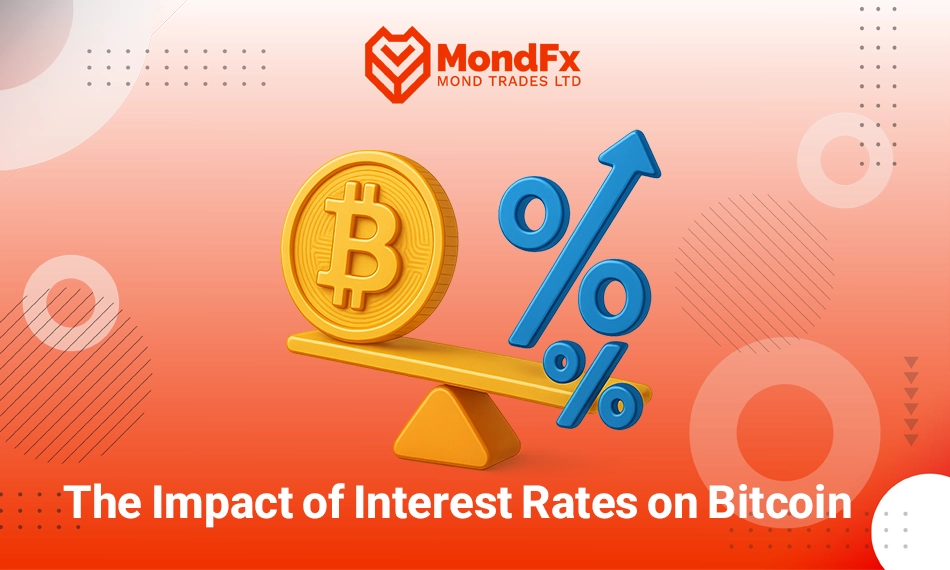
When interest rates rise, investors generally show greater preference for fixed income, lower risk assets. Under such conditions, markets for riskier assets, including cryptocurrencies, may face selling pressure. Conversely, when interest rates are low and returns on traditional assets decline, some investors seek alternative options with higher return potential, such as Bitcoin.
Interest Rates and Liquidity in the Cryptocurrency Market
Expansionary monetary policies that are accompanied by lower interest rates increase liquidity within the financial system. This excess liquidity can flow into the cryptocurrency market and contribute to rising Bitcoin prices. In contrast, contractionary policies characterized by higher interest rates and reduced liquidity can lead to capital outflows from the cryptocurrency market and result in lower Bitcoin prices.
Historical Examples of the Impact of Interest Rates on Bitcoin
In 2020, with significant global interest rate cuts and the implementation of expansionary monetary policies in response to the COVID-19 crisis, Bitcoin’s price rose from around $7,000 to over $60,000 in 2021.
In 2022, as the Federal Reserve began raising interest rates to curb inflation, the cryptocurrency market entered a period of broad decline and Bitcoin lost part of its value.
The Importance of Monitoring Interest Rates for Bitcoin Traders
Traders and investors active in the Bitcoin market must closely follow interest rate developments, particularly the monetary policies of the U.S. Federal Reserve. Changes in interest rates can affect market risk sentiment and consequently influence Bitcoin’s price movements.
Conclusion
Overall, it can be said that the relationship between interest rates and gold is a multi layered and complex network that shapes not only investor behavior but also the direction of major global economies. As a non yielding asset, gold is directly influenced by changes in interest rates and real interest rates; rising rates increase the opportunity cost of holding gold and lead to lower prices, while falling rates or negative real interest rates enhance gold’s appeal as a store of value.
This relationship is also intertwined with the value of the U.S. dollar, inflation conditions, monetary policies, and even the level of risk appetite in financial markets. A review of history shows that during periods of high inflation, financial crises, or expansionary monetary policies, gold has acted as a safe haven and experienced significant growth.
However, gold’s short term reaction can be sharp and emotional, while in the long term, a combination of economic factors, geopolitical conditions, and inflation expectations determines its trajectory. For traders, understanding this multidimensional relationship especially when monitoring central bank policies is essential, as interest rates influence not only gold but also the forex market, cryptocurrencies, and global risk sentiment.
With the support of MondFx, the path from learning to building personal strategies and achieving professional trading can be followed step by step.
Frequently Asked Questions About the Relationship Between Interest Rates and Gold
Is there always an inverse relationship between interest rates and gold prices?
No. Although rising interest rates generally lead to lower gold prices, this relationship is not absolute. During periods of geopolitical risk, financial crises, or severe inflation concerns, gold can rise even when interest rates are high. Therefore, macroeconomic conditions and investor behavior can strengthen or weaken this relationship.
Why does a reduction in interest rates cause gold prices to rise?
A decrease in interest rates lowers the opportunity cost of holding gold and reduces the attractiveness of yield bearing assets such as bonds. Under such conditions, investors turn to gold to preserve the value of their assets. Higher demand then boosts gold prices.
What effect do real interest rates have on gold prices?
Real interest rates, calculated by subtracting inflation from nominal interest rates, provide a more accurate indicator for analyzing gold’s performance. When real interest rates are negative, holding cash or bank deposits results in a loss of real value, making gold more appealing. Global statistics also show that gold tends to experience significant growth during periods of negative real interest rates.
What is the role of the dollar in the relationship between interest rates and gold prices?
Rising interest rates usually strengthen the U.S. dollar, and since gold is priced in dollars, a stronger dollar exerts additional downward pressure on gold. Conversely, lower interest rates weaken the dollar and support higher gold prices. For this reason, analyzing interest rates without considering the dollar index can be misleading.
Do interest rate changes immediately affect gold prices?
In the short term, yes. The gold market reacts quickly to central bank announcements, and any news of rate increases or cuts can trigger sharp volatility. However, in the long term, other factors such as sustained inflation, global demand, economic crises, and supply conditions also play significant roles in determining gold’s overall trend.
What is the impact of the Federal Reserve’s interest rate on gold prices?
The Federal Reserve’s interest rate is the most important monetary policy factor globally, and changes in it directly affect gold prices. Higher Fed rates generally push gold prices down because the dollar strengthens and the opportunity cost of holding gold increases. In contrast, lower interest rates or expansionary Fed policies support gold price growth.
Can the relationship between interest rates and gold be used for trading?
Yes. Professional traders usually monitor monetary policy changes and market expectations to determine buy or sell positions in gold. Anticipated rate hikes typically signal sell opportunities, while expected rate cuts signal buy opportunities. However, combining this analysis with technical analysis and global risk conditions is essential.
Does Bitcoin react to interest rates the same way gold does?
Bitcoin is also indirectly influenced by interest rates. Higher interest rates generally reduce appetite for high risk assets like cryptocurrencies, while periods of low interest rates and abundant liquidity can support Bitcoin’s growth. However, Bitcoin is less sensitive to interest rates than gold and is more influenced by liquidity flows and market sentiment.
Which factor is more important: nominal interest rates or real interest rates?
For more accurate analysis, real interest rates are more important because they incorporate the effect of inflation. Nominal rates may be high, but if inflation is higher, real interest rates become negative and gold remains attractive. Therefore, gold market analysts typically consider real interest rates as the primary indicator.