
Understanding the nature of transactions in the Forex market is accompanied by ambiguity for many novice traders. Contrary to popular belief, no physical commodity is exchanged in this market. Forex trading is based on derivative contracts that allow the trader to profit or incur losses from price fluctuations of currencies, gold, oil, or other assets without actual ownership of them. This trading structure, rather than resembling a commodities market, is more similar to derivative markets, where the primary objective is the accurate prediction of price direction. In this article, we will examine this topic in the Forex market. Stay with us.
How does Forex work?
Forex is a decentralized market (Over the Counter or OTC) in which banks, financial institutions, multinational companies, and retail traders buy and sell different currencies. Unlike traditional exchanges, Forex does not have a specific physical location, and all transactions are conducted electronically.
What is traded in Forex: Currency Pairs
In this market, traders trade currency pairs(Currency Pairs) such as EUR/USD, GBP/JPY, or USD/CHF. The main objective is to profit from price fluctuations, not to physically receive the currencies.
For example:
If you buy EUR/USD , it means you have bought euros and sold dollars.
If the euro price rises relative to the dollar, you make a profit.
However, at the end of the trade, no euros or dollars are deposited into your account; only the price difference is calculated as profit or loss.
What Instruments Are Traded in the Forex Market? A Complete Guide
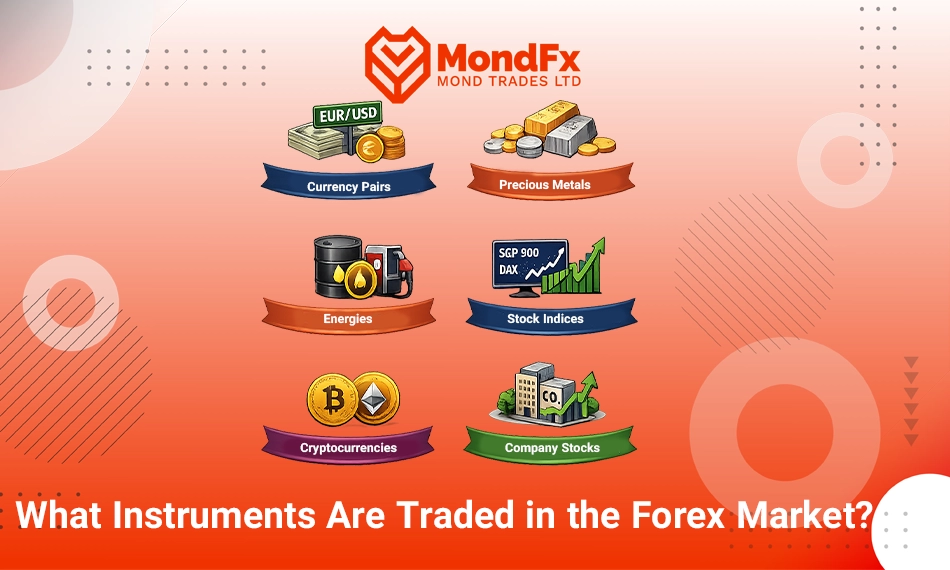
Although the Forex market was originally designed for the exchange of foreign currencies, today, in many brokerages, it has become a platform for trading a wide range of financial assets. What a trader trades in Forex usually does not involve direct ownership of the asset; rather, it is carried out in the form of contracts such as CFDs, which are based on price fluctuations of assets.
Currency Pairs
The core of the Forex market consists of currency pairs. In this type of trading, two currencies are set against each other, and the trader predicts whether the value of one currency will increase or decrease relative to the other. Currency pairs are divided into three main categories: major pairs (such as EUR/USD), minor pairs (such as GBP/JPY), and exotic pairs (such as USD/TRY).
Precious Metals
Many Forex brokers also provide the possibility of trading CFDs on precious metals such as gold (XAU/USD), silver (XAG/USD), platinum, and palladium. These trades are conducted on a spot basis without physical delivery, and their objective is to take advantage of price fluctuations.
Energies
Crude oil (WTI, Brent), natural gas, and other energy products are also tradable in the form of CFDs on Forex platforms. These assets usually have higher volatility and are attractive to short term traders.
Stock Indices
Some brokers also provide the possibility of trading CFDs on major global stock indices such as the Dow Jones, Nasdaq , S&P 500, Germany’s DAX, or the FTSE 100. These indices represent the economic conditions and stock market performance of a specific country or region.
Cryptocurrencies
In some Forex brokers, the ability to trade CFDs on cryptocurrencies such as Bitcoin, Ethereum, Litecoin, and Ripple is also available. This feature allows traders to benefit from cryptocurrency price fluctuations without the need to hold a wallet or use a crypto exchange.
Company Stocks
Some multi asset brokers also offer the possibility of trading CFDs on shares of well known international companies such as Apple, Amazon, Tesla, or Google. This feature is particularly attractive for traders who are looking for diverse opportunities.
Are Forex Trades Real or Just Speculation?
Understanding the concept of the “reality” of Forex trades requires distinguishing between two key aspects: reality from a financial perspective and reality from the perspective of asset ownership. Although real money, real profits, and real losses are involved in the Forex market, what the trader buys or sells does not necessarily imply physical ownership of the asset.
Real trading with non physical assets
In Forex, traders enter into contracts that are designed based on the price fluctuations of underlying assets such as currencies, gold, or oil. These contracts are executed through instruments such as CFDs or spot trades without delivery. In other words, when an individual buys the EUR/USD currency pair, no physical transfer between euros and dollars actually takes place. The only thing that changes is the trader’s profit or loss based on the price movement of that currency pair.
Difference from delivery based markets
In traditional markets such as exchange offices or commodity exchanges, buying and selling result in actual ownership of the asset. In Forex, however, trades are mostly conducted in the form of speculative contracts whose purpose is to take advantage of market fluctuations. For this reason, Forex should be considered among derivative or non delivery markets, rather than a market based on physical exchange.
Conclusion: real but not ownership based
Forex trades are completely real, as they are conducted with real money and real risk, and their profits or losses affect the trader’s account balance. However, they should not be confused with ownership based transactions. In Forex, the primary objective is to benefit from price movements, not to acquire the currency or commodity itself. This characteristic shapes the intangible yet fully real nature of the Forex market.
Are commodities traded in Forex?
The short answer is no; the Forex market is inherently a venue for the exchange of foreign currencies, and no physical commodities are bought or sold in it. However, there is an exception in this regard, which relates to the ancillary services offered by some brokers.
Some brokers active in the Forex market provide the ability to trade Contracts for Difference (CFDs) on commodities such as gold, oil, silver, and wheat. In this type of trading, you are not the actual owner of these commodities; rather, you simply take long or short positions based on their price fluctuations.
Profit or loss is derived solely from the difference between the entry and exit prices, and no physical delivery takes place. This feature is part of the broader range of services that some brokers offer to meet the diverse needs of traders, but it should not be confused with the core nature of the Forex market, which is exclusively focused on the exchange of currencies.
Are Commodity Trades in Forex Regulated?
Commodity CFD trading in the Forex market, unlike physical trading in traditional markets such as commodity exchanges, is not under the direct supervision of specialized commodity regulatory authorities. These trades are primarily subject to the financial regulations under which brokers are licensed to operate. For example, if a broker operates under the supervision of authorities such as the UK’s FCA, Cyprus’s CySEC, or Australia’s ASIC, the level of oversight and transparency in trade execution will be higher. However, in the absence of strong supervision or when operating under offshore regulators, the likelihood of inaccurate pricing, spread manipulation, and poor order execution increases.
As a result, traders who intend to engage in commodity CFDs should exercise greater caution when selecting a broker and ensure the credibility and strength of the regulatory framework under which the broker operates.
How Real Is Liquidity in Forex Commodity Trading?
In CFD trading offered on Forex platforms, liquidity appears to be very high, and traders can enter or exit positions almost at any time. However, it should be noted that unlike traditional commodity markets, this liquidity is not derived from the real depth of the global market.
In markets such as the Chicago Mercantile Exchange, liquidity is based on real buy and sell orders and the presence of actual market participants, whereas in the Forex market, the liquidity of CFD contracts is simulated by liquidity providers and the brokers themselves.
This difference can lead, during low volume hours, to wider spreads, higher slippage, or even unexpected price fluctuations. Understanding this distinction is highly important for traders who intend to operate professionally in commodity instruments within the Forex market.
Commodities You Might Not Expect to Be Traded in Forex
Alongside common assets such as gold and oil, some Forex brokers also provide the ability to trade CFDs on less well known commodities. Assets such as natural gas, coffee, cocoa, cotton, or even coal are made available to traders through dedicated trading symbols. These commodities are typically traded in futures markets or specialized exchanges, but by offering their CFD versions, brokers enable Forex traders to access the price fluctuations of these markets. However, it should be noted that liquidity, high volatility, and specific trading hours may increase the risk associated with these assets.
What are the best times to trade gold and oil in Forex?
The Forex market operates 24 hours a day, five days a week, excluding Saturdays and Sundays, but not all tradable assets exhibit uniform volatility. Gold usually experiences the highest volume and volatility during New York market hours, as physical markets such as COMEX are also open during this time. The period between approximately 17:00 and 21:00 Tehran time is generally considered the best time window for trading gold.
Crude oil also typically experiences sharp volatility before and after the release of the weekly U.S. energy inventory reports (Wednesday evenings). Identifying key volatility periods can help optimize entries, exits, and even the placement of stop loss and take profit levels, and can prevent exposure to irrational market movements during low volume hours.
Is the price of gold in Forex different from the global market?
The prices of commodities such as gold or oil traded in Forex are not necessarily identical to official global market prices. Brokers usually receive gold prices from liquidity providers, but these prices may differ by a few pips or even a few cents from reference prices in markets such as COMEX or the global spot market. Differences in pricing sources, internal broker fees, or applied spreads are among the factors that cause CFD prices not to exactly match global rates. For this reason, traders who use intermarket analysis should pay close attention to this issue when comparing prices between the MetaTrader platform and international sources.
Why Do Some People Think Forex Is a Commodity Market?
The misunderstanding of the nature of the Forex market among novice traders has various reasons, most of which relate to how brokers present their services, intermarket influences, and similarities in terminology. Below, three main reasons for this misconception are discussed.
Misleading advertising by some brokers
Part of this perception stems from the way advertising is conducted in the online space. Some brokers use phrases such as trading gold and oil in Forex, creating the impression that the Forex market is a platform for the direct buying and selling of physical commodities. In reality, however, these trades are Contracts for Difference (CFDs), and no physical exchange takes place between the parties. These services are part of the ancillary offerings provided by brokers to increase the diversity of tradable assets and should not be confused with the core nature of the Forex market.
The impact of commodity markets on currencies
Some commodities, such as oil and gold, have a direct impact on the value of certain currencies. For example, an increase in oil prices often leads to a strengthening of the Canadian dollar, because Canada’s economy is dependent on oil exports. This economic relationship between commodities and currencies leads some traders to assume that commodities themselves are also directly traded in Forex. In reality, what is traded in the Forex market is currency pairs, whose prices may be influenced by commodity markets, but no physical trading of commodities takes place.
Similarity of terminology between markets
The shared use of terms such as “buy,” “sell,” and “exchange” in both the Forex market and commodity markets is another factor that causes confusion. Although similar terminology is used in both markets, their underlying concepts are entirely different. In commodity markets, buying and selling imply physical ownership of an asset, whereas in Forex, these terms merely refer to entering a trading position within the framework of a financial contract. Failure to recognize this conceptual difference leads to misunderstandings about the true nature of trading in the Forex market.
Is it possible to trade commodities in Forex without swap?
Many traders enter the Forex market with different motivations, and some prefer to conduct their trades in accordance with Islamic principles. In this regard, some brokers offer swap free accounts, commonly referred to as Islamic accounts. However, it should be noted that in CFD trading on commodities, the availability of Islamic accounts may be subject to certain limitations. Some brokers compensate for the absence of overnight interest by applying alternative charges such as a fixed daily commission or wider spreads. In addition, for certain assets such as gold or oil, access to Islamic accounts may only be available for a limited period of time. As a result, traders who are interested in operating through such accounts should carefully review the conditions of each asset and broker to avoid encountering hidden costs.
If you want to trade commodities, what options do you have?
Due to its non physical nature, the Forex market is not considered a suitable option for the direct trading of commodities. If your goal is to invest in or trade real commodities such as gold, oil, silver, or wheat, you should turn to markets whose structures are based on physical delivery or actual ownership of the underlying asset. Below, we will become familiar with three main markets for trading commodities.
Commodity Exchanges
A commodity exchange is a structured market for the buying and selling of various essential commodities. In these markets, traders can buy and sell commodities either physically or through futures contracts. Trading on such exchanges is conducted under strict supervision, and there are specific standards for the quality, quantity, and delivery time of commodities.
The Chicago Mercantile Exchange (CME) and the London Metal Exchange (LME) are among the most well known examples of this type of market, where a wide range of commodities including metals, agricultural products, and energy are traded.
Futures Contracts
A futures contract is a type of legal agreement between two parties to buy or sell a specific commodity at a predetermined price on a specified future date. These contracts are considered the primary instruments for risk hedging as well as speculation in commodity markets.
Some futures contracts result in physical delivery of the commodity; for example, a crude oil futures contract may involve the actual delivery of 100 barrels of oil at maturity. In this type of market, professional traders enter positions with a clear understanding of settlement and delivery mechanisms.
Exchange Traded Funds (ETFs)
If the objective of entering the commodity market is to benefit from price fluctuations rather than to receive the physical commodity, exchange traded funds can be a suitable and simpler option. These funds are designed so that their value has a direct correlation with the price of a specific commodity such as gold or oil.
For example, the SPDR Gold Trust (GLD) is one of the most popular gold investment funds, and its performance is directly aligned with the global price of gold. Using these instruments does not require dealing with complex contracts or physical delivery and is suitable for non technical or medium term investors.
Common Psychological mistakes in Forex Commodity Trading
Trading commodities such as gold and oil is associated with specific psychological characteristics that distinguish it from trading currency pairs. Gold, as a safe haven asset, typically rises in price during periods of political or economic uncertainty. This has led many traders to exhibit emotional reactions toward gold during times of crisis.
Similarly, the oil market is heavily influenced by geopolitical news and global supply conditions, and its volatility can trigger impulsive decision making. Such emotional reactions in short term trading can result in premature entries, early exits, or irrational position sizing. Managing emotions in commodity markets requires experience, a well defined strategy, and a longer term perspective compared to the currency market.
Why is high leverage more dangerous in gold trading than in currencies?
One of the key differences between trading commodities and currency pairs in the Forex market lies in the level of volatility and its impact on the use of leverage. Gold, oil, and other commodities tend to experience sharper price fluctuations over shorter time frames compared to many currency pairs. As a result, using high leverage when trading these assets can lead to sudden losses or margin calls.
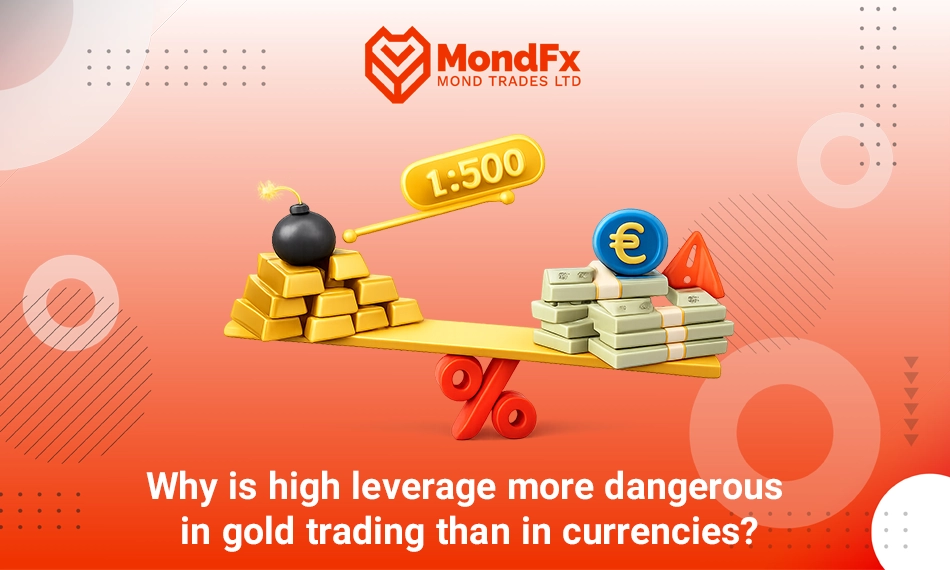
For example, a $20 move in gold with 1:500 leverage can wipe out the entire balance of a small account within seconds. Therefore, risk management in commodity CFD trading is critically important, and traders must adjust their chosen leverage in accordance with the inherent volatility of each asset.
Final Words
In the Forex market, trading does not mean buying or selling a physical commodity; rather, what a trader does is enter into contracts based on the price fluctuations of assets. Currency pairs form the core of this market, and trading them is carried out solely for the purpose of profiting from price changes, without any actual transfer of currency ownership. In addition to currencies, some brokers also provide the possibility of trading CFDs on precious metals, energies, stock indices, cryptocurrencies, and even international equities; however, in all these cases, physical ownership of the asset is not transferred to the trader, and profit or loss is calculated solely based on price movements.
Compared to delivery based markets such as commodity exchanges, Forex has a derivative and non physical nature, and its trades are conducted under financial regulatory frameworks rather than direct commodity market regulations. The liquidity and prices offered in commodity CFD trading are derived from real global market sources and may differ from reference rates. Traders should be aware that sharp volatility, low volume periods, and high leverage in commodities such as gold and oil create higher risks compared to currency pairs, making emotional control and risk management especially important in these trades.
Ultimately, Forex is a market that is financially real in terms of capital, profits, and losses, but its nature is intangible and contract based. Traders can benefit from its diverse opportunities; however, they should not confuse it with ownership based buying and selling of commodities. Traditional commodity markets, futures contracts, and exchange traded funds are alternative options for individuals who seek actual asset ownership or direct access to commodity trading.
By accompanying MondFx, one can move step by step along the path of building a personal strategy and engaging in informed trading.